Linear rail cost at a glance
Currency, region and tax treatment change the number you see, so compare listings on the same basis.
| Tier | Typical use | Example price signal | What you're paying for |
|---|
| Hobby / 3D-printer miniature | Printers, light jigs, small DIY axes | West3D rails with carriages (CNA / H Class) from $14.99 (listed October 2026; rail length and size not shown) | Small section, light load, basic accuracy, often sold as a rail-plus-carriage set |
| Light-duty / commercial | Automation, general machinery in dirty environments | PBC Commercial Rail: 1,000 mm × 30 mm steel rail at $51.65; carriages at $91.63 (20 mm) and $114.89 (45 mm) (listed October 2026) | Zinc-plated carbon steel rail, sealed roller carriage, wipers, standard mounting holes |
| Industrial profile rail (ball) | CNC axes, production machinery | Indicative ranges in the next table | Ground rail, higher accuracy classes, preload options, published load ratings |
| Heavy-duty roller rail | Heavy-load or high-rigidity axes | Indicative ranges in the next table | Larger sections, roller contact, higher load capacity |
For the low end, a wide miniature profile such as the HVW wide miniature linear guideways suits compact axes. What a rail is and how the types differ is covered in the linear rail explainer.
Indicative ranges for 15, 20, 25 and 35 mm profile rails
These are rounded market ballparks in USD for catalog-grade profile rails, with rail priced per metre and carriage priced each. They exclude freight and tax. Premium Japanese and European brands can sit above the top of each range, and they are not Haozhi quotes. Prices move with preload, carriage type (flange or block) and order volume.
Ball profile rails
| Size | Grade | Rail per metre | Carriage each |
|---|
| 15 mm | Normal | $25–45 | $18–35 |
| 15 mm | Precision | $40–80 | $30–60 |
| 20 mm | Normal | $35–60 | $25–45 |
| 20 mm | Precision | $55–110 | $40–80 |
| 25 mm | Normal | $45–80 | $35–60 |
| 25 mm | Precision | $75–150 | $55–110 |
| 35 mm | Normal | $80–140 | $60–110 |
| 35 mm | Precision | $130–260 | $100–200 |
Roller profile rails
| Size | Grade | Rail per metre | Carriage each |
|---|
| 15 mm | Normal / precision | Seldom offered in roller form; quote only | Quote only |
| 20 mm | Normal | $60–110 | $60–120 |
| 20 mm | Precision | $100–200 | $100–180 |
| 25 mm | Normal | $85–150 | $90–170 |
| 25 mm | Precision | $140–260 | $140–260 |
| 35 mm | Normal | $140–250 | $150–280 |
| 35 mm | Precision | $230–420 | $240–420 |
The pattern matters more than any single figure. Each step up in grade roughly adds 50-100% to rail and carriage prices, and moving from ball to roller at the same size adds roughly a quarter to a half again.
Worked example: a 2-rail, 4-carriage, 1 m axis
Two parallel 1,000 mm rails with two carriages on each rail means 2 rails and 4 carriages.
| Tier | Calculation | Hardware total |
|---|
| Hobby | 4 rail-and-carriage sets at $14.99 each | $59.96 (four carriages, with two spare rails). Treat this as a ceiling; the listing does not show rail length. |
| Commercial | 4 carriages at $91.63 (20 mm) or $114.89 (45 mm) | $366.52 to $459.56 for the carriages alone, before the two rails |
| Ball, 25 mm, normal | 2 × $45–80 + 4 × $35–60 | $230–400 |
| Ball, 25 mm, precision | 2 × $75–150 + 4 × $55–110 | $370–740 |
| Roller, 25 mm, normal | 2 × $85–150 + 4 × $90–170 | $530–980 |
| Roller, 25 mm, precision | 2 × $140–260 + 4 × $140–260 | $840–1,560 |
In every tier above hobby, the four carriages cost more than the two rails. Freight, surface preparation, alignment time, lubrication and wipers come on top of these figures.
The cost of DIY linear rail setups (printed brackets, supported shafts, extrusion-and-wheel slides) can look lower on paper. It shifts cost to your own alignment time and to accuracy you cannot easily specify.
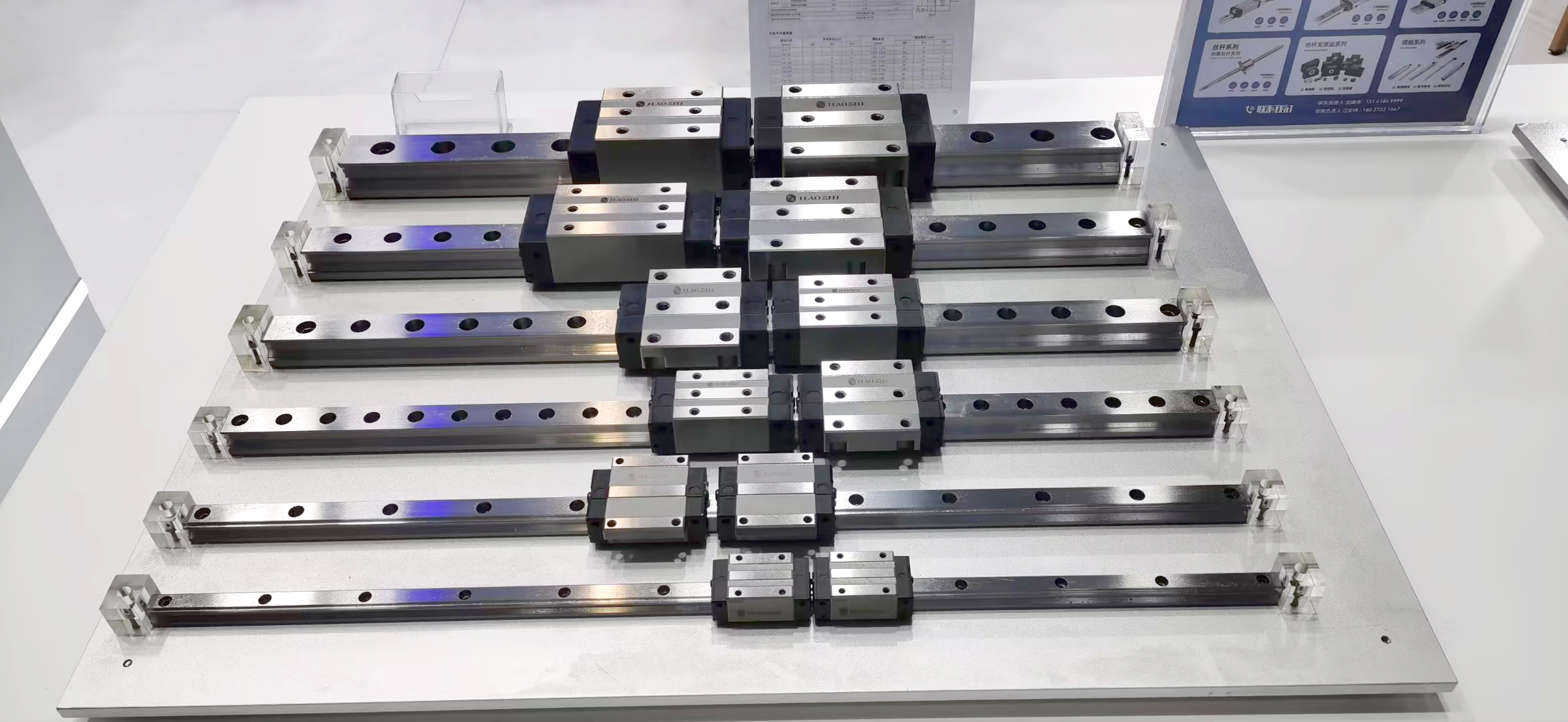
If you already know the axis you are building, the range of linear guides and ball screw systems for CNC machines is the faster route.
Why are linear guide rails so expensive?
Precision rails are expensive because accuracy, load capacity and hardness all come from grinding, heat treatment and inspection, which take machine time and tolerate little scrap. Carriages multiply the cost. The factors below are general tendencies, not fixed ratios.
Precision grade and grinding
Tighter accuracy classes require more grinding, more inspection and more sorting of parts into matched sets. Class names differ by brand, so compare each manufacturer's own grade table rather than assuming "high" means the same thing everywhere. Choosing a higher class than the axis needs is one of the easiest ways to overspend.
Material, heat treatment and coating
Hardened steel rails cost more to produce than aluminium or unhardened sections, and stainless or coated rails add further cost. A zinc-plated carbon steel rail, like the commercial example above, buys corrosion resistance. A bare hardened rail may need oil protection in humid shops.
Load rating and size: ball vs. roller
Higher dynamic and static ratings mean a larger section and more rolling contact. Roller designs generally carry more load per size than ball designs and usually cost more. For heavy axes, compare the HAR heavy-duty ball linear guides against the HBR heavy-duty roller guideways using catalog load ratings, not price alone.
Length, joints and carriages
Longer pieces raise the total price and the freight bill. Where an axis is longer than a single rail can supply, joined sections add alignment labour at each joint. Every extra carriage adds cost fast, as the worked example shows.
Brand, QC and volume
Established brands charge for traceability, interchangeability and consistent preload. Low-volume or unusual SKUs cost more than stock sizes.
Which factor moves the price most? As a judgement call: load rating and size first, accuracy class second, carriage count and length third. Brand matters least when you compare like-for-like catalog data.
The costs that aren't on the rail quote
A cheap rail on a poorly prepared surface performs like a cheap rail. These costs rarely appear in the quote:
Mounting-surface preparation. Rails follow the surface they are bolted to. Flatness errors in a milled or cast base transfer directly into the motion, so the base may need machining or grinding.
Alignment and installation time. Setting parallel rails, shimming and checking preload takes skilled labour. Rails with reference edges or alignment features shorten this.
Lubrication and wipers. Grease intervals, lubrication fittings and wiper or seal kits are recurring costs and affect service life.
Replacement interval. Rails and carriages wear as a set. A rail that needs replacing twice as often is not cheaper.
A quick total-cost checklist before you order:
Is the mounting surface flat enough, or does it need machining?
How many carriages does the axis really need?
What is the lubrication method and who does it?
What does an hour of downtime cost if the axis fails mid-production?
The rail is one part of a motion axis. Linear motor drives add cost: see linear motor cost. Rotary drives add more: see servomotor cost. Other axis components that share the same budget include the XtrapulsEasy 60 VDC compact servo drive and the DZGD-180A31 rotary table with tailstock.
Where can I get cheap linear rails?
The cheapest rails come from maker shops, online marketplaces and surplus, while the cheapest reliable rails usually come from catalog distributors, or direct from a manufacturer when you buy in volume. What you save depends on how much documentation, consistency and support you need.
Where buyers look
Maker and 3D-printer shops: low prices on miniature rails, small sizes, limited lengths.
Marketplaces (Amazon, eBay, AliExpress): the widest price range, with variable consistency and often little documentation.
Industrial catalog distributors: published data sheets and stock sizes, at higher prices.
Direct from a manufacturer: the best fit for volume and repeat orders; lower unit cost, but quotes and lead times apply.
Surplus and used: cheap up front, with unknown wear and mismatched parts.
What "cheap" can cost you
Length is where the cheapest listings thin out. In an r/3Dprinting thread titled "How bad are cheap linear rails? Ebay or?", a builder needing 1,000 mm of travel, so rails around 1,200 mm long, noted they did not see many options over 1 m on AliExpress. That is one anecdote, not a market survey.
Beyond availability, the risks are structural rather than anecdotal. Without a data sheet you cannot check load rating or accuracy class, and without a stated preload class you cannot expect carriages to feel alike. Test a sample before buying long lengths.
Ways to lower cost without buying the cheapest
Use standard lengths rather than custom cuts.
Choose the smallest size that meets the load with a safety margin.
Buy rail and carriages as a matched set.
Specify only the accuracy class the axis needs.
Consolidate orders across machines.
Ask a manufacturer for a volume quote if you build more than a few units.
When cheap rails are fine, and when they aren't
Match the rail grade to what fails if it underperforms:
Prototype, 3D printer or light jig: cheap rails are usually fine. The cost of a bad rail is a rebuild, not scrap or downtime.
Hobby CNC: acceptable for soft materials and light cuts. Expect more alignment effort, and expect carriages to wear first.
Production machine: buy a documented rail with published ratings and stable supply. A line stoppage costs more than the saving.
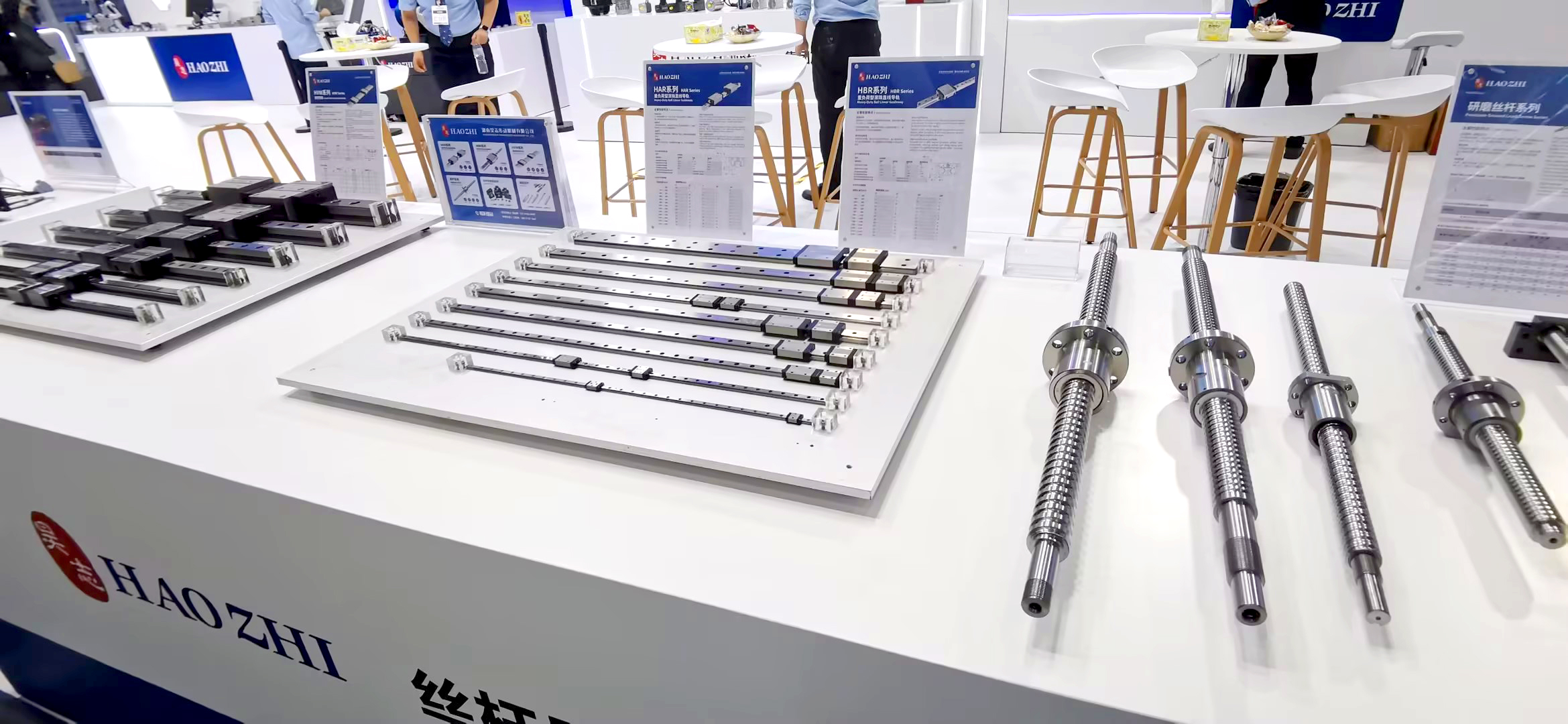
Precision or heavy-load axis: specify the accuracy class and load rating from a catalog, then check mounting surface requirements. The Haozhi Linear Guide range includes miniature, heavy-duty ball and heavy-duty roller types for these axes.
A supplier can price a rail quickly if you send the details that define the configuration:
rail width or size
length per rail, and total length if joined
number of carriages per rail
preload and accuracy class
environment (coolant, chips, dust, washdown)
annual quantity
mounting orientation (horizontal, vertical, wall)
Send these through Request Technical Consultation and an engineer can match them to a catalog size.
FAQ
Why are linear rails so expensive?
Accuracy, hardness and load capacity all come from grinding, heat treatment and inspection, which are slow and unforgiving of scrap. Larger sections and roller designs add material and more precise contact. Carriages multiply the cost, since each axis needs several. Brand traceability and low-volume SKUs add further cost.
Where can I get cheap linear rails?
Maker shops and marketplaces such as Amazon, eBay and AliExpress are the cheapest, mainly for miniature rails. Catalog distributors cost more but supply data sheets. For volume, a manufacturer quote is often the best value. Cheaper sources tend to offer less documentation, and fewer options beyond about one metre.
How much weight can a linear rail hold?
It depends on rail size, whether it is a ball or roller design, and the manufacturer's rated dynamic and static loads. Look up the catalog values for your exact size and carriage type. Then apply a safety factor for shock, moment loads and expected life rather than loading to the rating.
How accurate are linear rails?
Accuracy depends on the grade class, and higher grades cost more because they need more grinding and inspection. Real-world accuracy also depends on the mounting surface, alignment and preload. A high-grade rail on an uneven base will not deliver its rated accuracy, so check the base before the grade.
How much does a linear rail cost per meter?
For catalog ball rails, indicative market prices run from roughly $25–45 per metre for a normal-grade 15 mm rail to $130–260 for a precision-grade 35 mm rail. Roller rails sit higher. Carriages are priced separately. Premium brands, preload options and length change the figure, so confirm with a quote.
Is the carriage included in the rail price?
Often not. Many suppliers price the rail per length and the carriage separately, as in the commercial example above. Hobby sets are an exception and may bundle rail and carriage. Check whether a listing is "rail only", "carriage only" or "set" before comparing prices.
Are cheap linear rails from eBay or AliExpress any good?
They can work for light, low-stakes axes such as printers and prototypes. The risks are missing data sheets, unstated preload and limited choice at long lengths. Test a sample before buying long lengths, and avoid them for production machines where downtime costs more than the savings.
Is DIY linear rail cheaper than buying a complete rail system?
Sometimes on material cost, rarely on total cost. DIY slides built from shafts, extrusion or wheels need your own alignment time and give you no specified load or accuracy rating. For a one-off hobby axis it can make sense. For anything repeatable or load-bearing, a catalog rail is usually cheaper overall.
Do roller rails cost more than ball rails?
Generally yes at the same size. Roller designs carry more load and are stiffer, which takes tighter contact tolerances. In the indicative ranges above, a roller rail costs roughly a quarter to a half more than a ball rail of the same size and grade. Compare catalog ratings before deciding.
How much do heavy-duty linear slide rails cost?
Heavy-duty rails cost more because of larger sections, roller elements, longer lengths and higher grades. A precision-grade 35 mm roller rail runs roughly $230–420 per metre in the indicative ranges above, with carriages in a similar band each. Final price depends on length and carriage count, so request a quote.
Do I have to buy a motor with the rail?
No. A linear rail is a passive guide that supports and directs the carriage. The drive, such as a ball screw, belt, rack or linear motor, and its servo motor and drive are bought separately. Budget for them as their own line items.
Where can I find a linear guide rail catalog?
Manufacturers and distributors publish catalogs with sizes, load ratings and accuracy classes. The Haozhi range of miniature, heavy-duty ball and heavy-duty roller guides is on the linear guides and ball screws page.
Rail pricing makes more sense once you split it into rail, carriage, grade and preparation. For a size and configuration matched to your axis, browse the linear guides and ball screw systems or contact our team.

 Home